
All About Pens
The ability to read and write has always been one of mankind's greatest achievements. Reading and writing allowed for the recording, protection and spread of ideas, information and new discoveries. But we would never have been able to read about all these great inventions, discoveries and ideas if someone hadn't first discovered how to write them down. So, what were the first writing instruments, and how did they evolve over time?refund of the purchase in full.
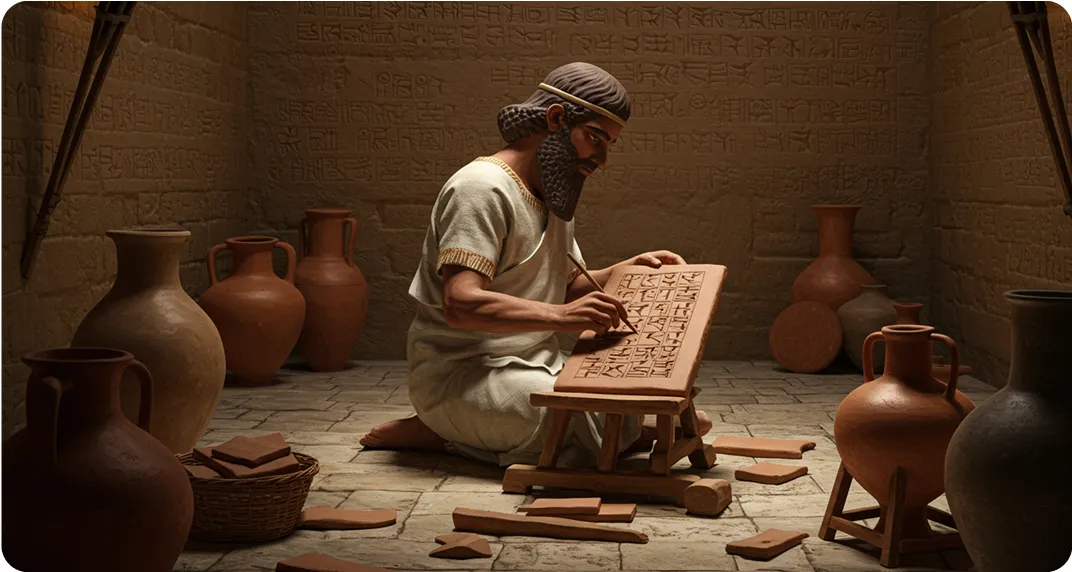
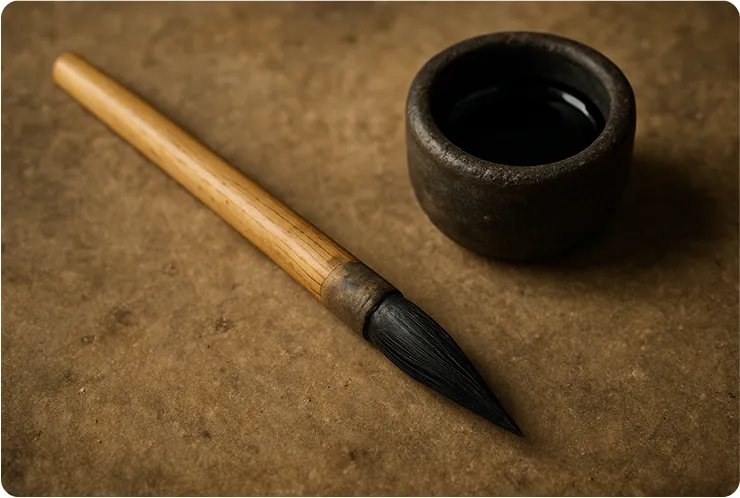
Cuneiform writing was the first form of writing, followed by brush-writing. Thin-tipped brushes dipped in ink made from natural dyes replaced the use of wax or clay tablets, allowing for clearer writing on papyrus—a cloth made from reeds. The word "papyrus" eventually led to the modern term "paper." Some East Asian countries still use brush pens for writing characters in languages like Chinese and Japanese.
The first writing instruments were stylii—specially shaped sticks used to press wedge-shaped characters into soft wax or clay tablets. Developed by the Sumerians thousands of years ago, these stylii and the resulting wedges formed the first writing system, known as 'cuneiform.' By organizing the wedges by size, distance, and design, the Sumerians created the first alphabet and writing system.
With trade and travel, writing gradually spread around Europe and the Mediterranean Basin. The Sumerians who invented writing, lived in the Mediterranean, so the nearest countries, such as Egypt and Italy and Germany and Greece, were the first places to pick up on this new invention of 'writing.
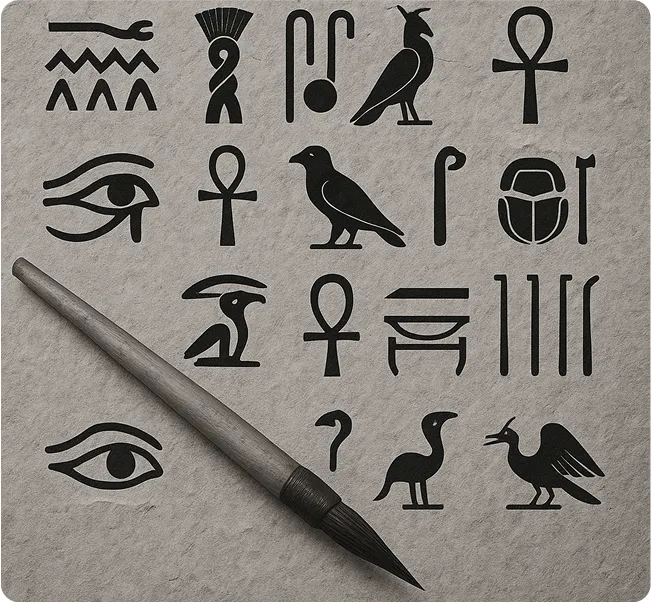
The Egyptians created a form of picture-writing known as hieroglyphs, again, using brush pens. While very pretty, hieroglyphs took a long time to write, and they could bedifficult to read. It was evident
that a clearer form of writing was required, and with it,
better tools.
With trade and travel, writing gradually spread around Europe and the Mediterranean Basin. The Sumerians who invented writing, lived in the Mediterranean, so the nearest countries, such as Egypt and Italy and Germany and Greece, were the first places to pick up on this new invention of 'writing'.
The Egyptians created a form of picture-writing known as hieroglyphs, again, using brush pens. While very pretty, hieroglyphs took a long time to write, and they could be difficult to read. It was evident that a clearer form of writing was required, and with it, better tools.
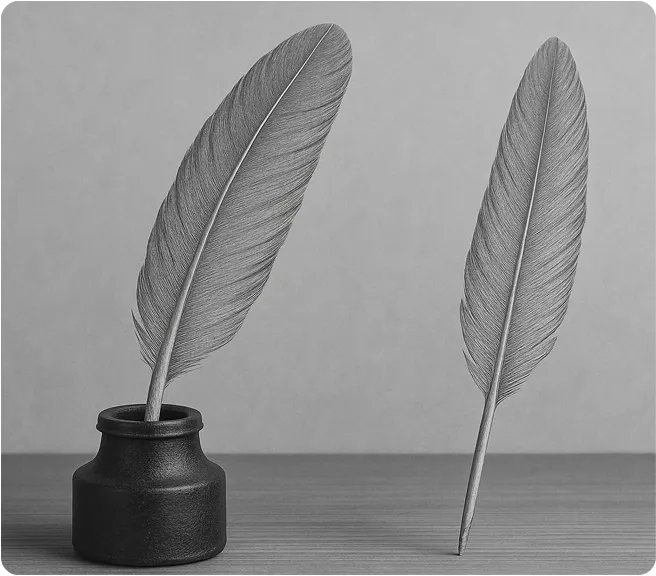
The Quill
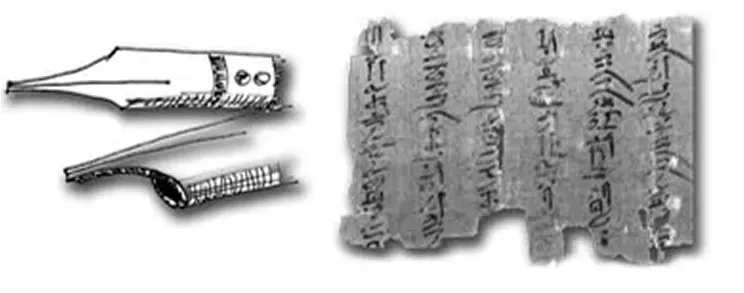
By the medieval period, the quill had replaced the reed pen as the main writing instrument. Made from large bird feathers (typically goose), quills were stronger and stiffer, allowing for better writing and various styles depending on how the tip was cut. This era also saw a shift from
papyrus to vellum, and later to paper, as writing surfaces.
The quill remained dominant for centuries and was used to write important documents like the Bible and the American Declaration of Independence. Though it required frequent sharpening with a small knife—hence the term "pen-knife"—it was indispensable. The quill’s flexible tip enabled expressive scripts like Gothic, roundhand, Copperplate, and Spencerian, shaping
the evolution of handwriting.
The Steel Pen
In the 18th and 19th centuries, a little something called the Industrial Revolution swept through Europe. With the power of wind, water, fire and steam, machines began to be manufactured which could produce all kinds of things. All these new inventions naturally created a lot of paperwork. Mankind needed a better kind of writing instrument to put all the wages and salaries and information down on paper. Then one day, an intelligent man thought to himself that if pen-points were made of something tougher, stronger and which would last longer, he could make a fortune. What if pen-points, instead of being the easily-worn-out tips of feathers, were actually made of something tough and durable...like...metal? Using steam-powered presses, special moulds and sheets of metal, the first mass-production of metal pens were created, at the end of the 18th century. The invention of a simple, cheap, durable pen-point which could be made in its thousands revolutionized the writing world. Now, if you wanted to write, all you had to do was go down to the shop and buy a box of pens and a pen-holder. The metal pen caused all kinds of changes in the world. For the first time, cheap, reliable pens were available in their thousands to the masses, which greatly boosted literacy rates and helped to improve education. While the metal pen allowed for quicker and more comfortable writing, one crucial problem still remained.
Modern Day Pen
-4e5b21a4-ba3c-4c55-b601-92907f2920ae.jpg)
Fountain Pen
A fountain pen uses water-based liquid ink delivered through a nib. The ink flows from a reservoir through a "feed" to the nib, then through the nib, due to capillary action and gravity. The nib has no moving parts and delivers ink through a thin slit to the writing surface. A fountain pen reservoir can be refillable or disposable, this disposable type being an ink cartridge. A pen with a refillable reservoir may have a mechanism, such as a piston, to draw ink from a bottle through the nib, or it may require refilling with an eyedropper. Refill reservoirs, also known as cartridge converters, are available for some pens which use disposable cartridges.
-ede02cd6-6476-4f7f-8526-299fc9977f82.jpg)
Rollerball Pen
A rollerball pen dispenses a water-based liquid or gel ink through a ball tip similar to that of a ballpoint pen. The less-viscous ink is more easily absorbed by paper than oil-based ink, and the pen moves more easily across a writing surface. The rollerball pen was initially designed to combine the convenience of a ballpoint pen with the smooth "wet ink" effect of a fountain pen. Gel inks are available in a range of colors, including metallic paint colors and glitter effects.
-d9722c11-cf52-4da9-8b92-c25bde376016.jpg)
Ballpoint Pen
A ballpoint pen dispenses viscous oil-based ink by rolling a small hard sphere, usually 0.7–1.2 mm and made of brass, steel or tungsten carbide. The ink dries almost immediately on contact with paper. The ballpoint pen is usually reliable and inexpensive. It has replaced the fountain pen as the most common tool for everyday writing.